As winter rolls in and temperatures drop, it’s not just your home or personal vehicle that needs attention — your fire apparatus must also be ready for the challenges of cold weather. For fire departments, especially in rural or remote areas, properly winterizing trucks and tanks is vital to ensure readiness during emergencies.
At Osco Tank & Truck Sales, we know that protecting life-saving vehicles from harsh winter conditions starts with proactive care. Here’s how to get your fire trucks winter-ready.

Why Winterizing Fire Trucks Matters
Sub-zero temperatures can cause severe operational problems — from frozen pumps and cracked valves to sluggish batteries and stuck doors. If your truck isn’t prepared, the risks go beyond equipment failure; they can delay response times during emergencies.
Winter maintenance ensures your truck performs as expected, keeps firefighters safe, and extends the life of your investment.
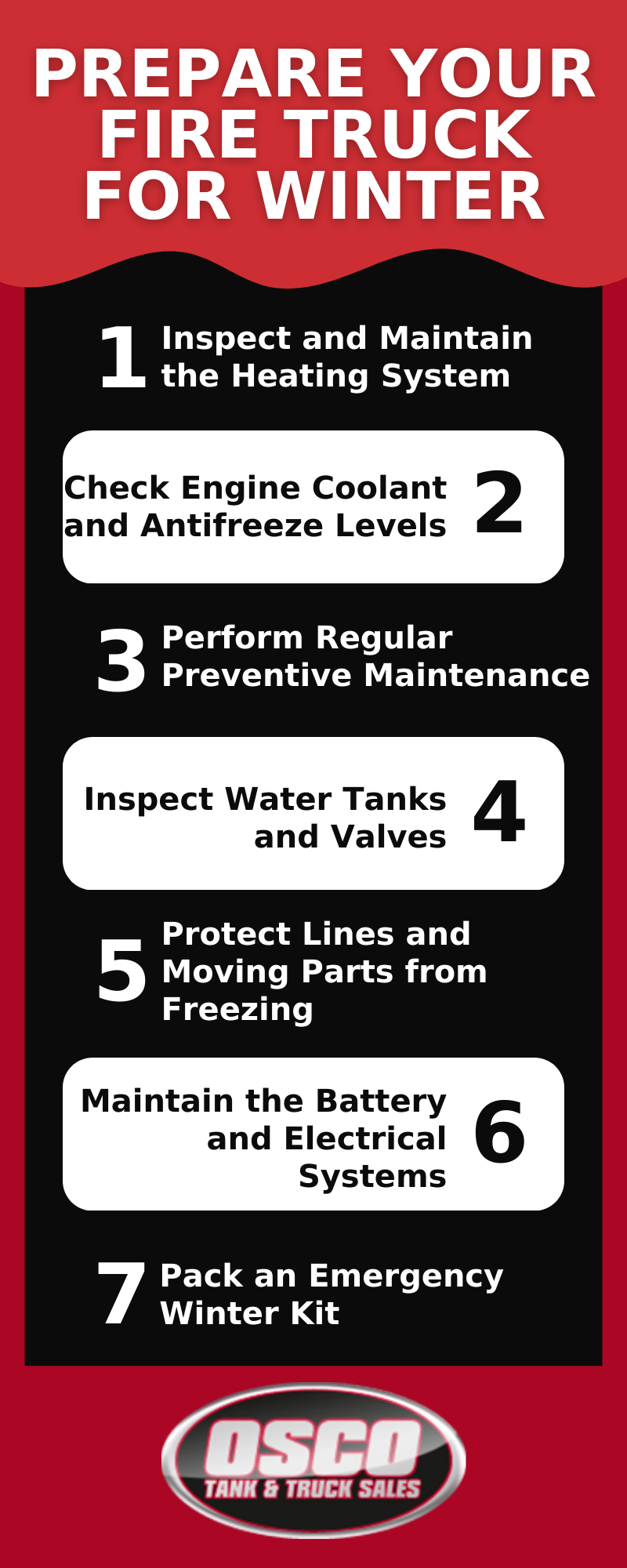
7 Steps to Prepare Your Fire Truck for Winter
1. Inspect and Maintain the Heating System
A reliable heating system is critical — not just for crew comfort, but for protecting interior components and keeping water systems from freezing. Check heater cores, blower motors, and defrosters. Make repairs early to avoid surprises in the field.
2. Check Engine Coolant and Antifreeze Levels
Verify that your coolant and antifreeze are suited for extreme cold. Follow manufacturer guidelines for the proper mix and flush or refill fluids as needed. Inadequate coolant protection can lead to cracked engine blocks and costly downtime.
3. Perform Regular Preventive Maintenance
Before snow and ice arrive, inspect oil levels, order replacement parts, and ensure the windshield wipers are working correctly. Spray caps and plugs with lubricant to make them easier to open and close. These simple steps reduce the risk of cold-weather malfunctions.
4. Inspect Water Tanks and Valves
Water systems are especially vulnerable. Leaky valves can allow moisture to enter pumps and pipes, where it may freeze and cause blockages. Preventative inspections and maintenance reduce the chance of clogs or damage in cold weather.
5. Protect Lines and Moving Parts from Freezing
Identify parts at risk of freezing, such as hydraulic lines, turrets, steering components, and drive trains. Use cold-weather-rated fluids and consult with your EVTs or the manufacturer for compatibility with synthetic oils or lubricants, if necessary.
6. Maintain the Battery and Electrical Systems
Cold weather strains your battery. Inspect terminals for corrosion, tighten connections, and test capacity. Also, check all exterior lights, sirens, and communication systems to make sure your electrical setup is ready for winter operations.
7. Pack an Emergency Winter Kit
Outfitting your truck with an emergency cold-weather kit is smart prep. Include ice scrapers, snow brushes, blankets, gloves, extra wiper blades, de-icer, and emergency gear. It ensures that firefighters stay safe and operational even if they are stranded.
Osco Tank & Truck Sales Is Here to Help
Winter can be brutal — but your fire truck doesn’t have to suffer for it. Osco Tank & Truck Sales can help prepare your fleet for winter with:
- Custom-built fire and water trucks tailored to cold-weather needs
- Replacement or refurbished stainless steel tanks
- Durable poly tanks designed for rugged winter conditions
- Expert insight and customer-focused support
Whether you need a new build or a seasonal check-in, we’re ready to help you stay ready.
Contact Us Today
Don’t wait until the first deep freeze to think about maintenance. Contact Osco Tank & Truck Sales today to learn more about winterizing your fire truck and keeping your apparatus running strong all season long.