If you’re researching fire apparatus, you’ve probably seen the terms water tender and fire tanker used interchangeably. While they often refer to similar types of trucks, they are not always the same thing. Understanding the difference matters, especially when you’re buying, spec’ing, or budgeting for a new unit.
Choosing the wrong type of truck can lead to performance issues, compliance problems, or unnecessary costs down the road.
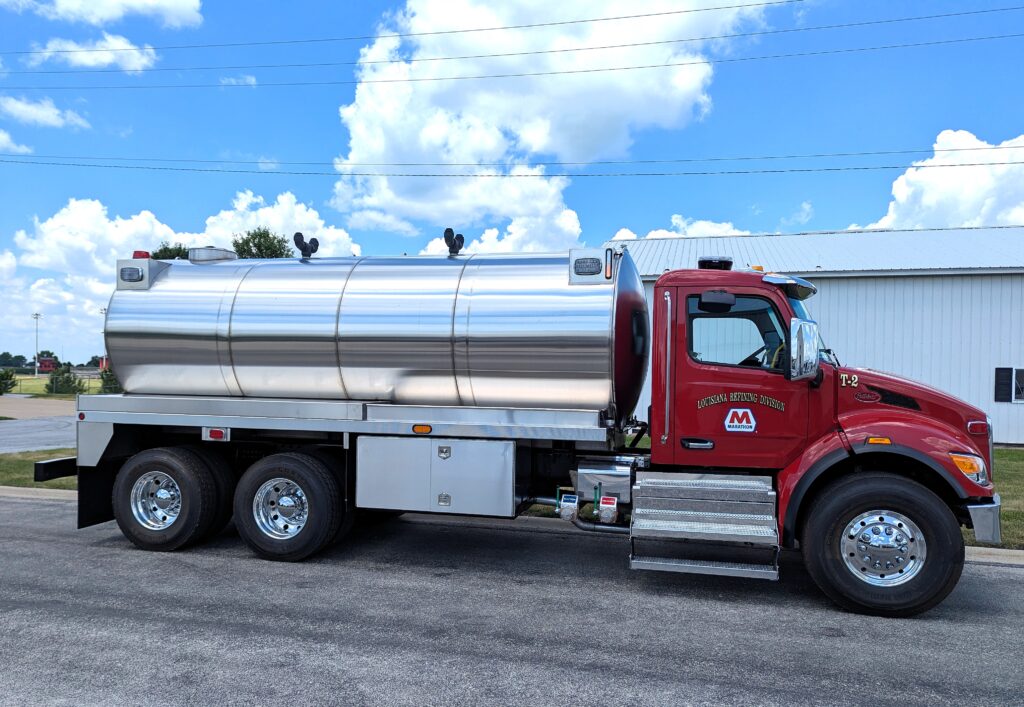
What Is a Water Tender?
A water tender is designed primarily to transport water from a fill site to a fire scene. These trucks are common in rural areas where hydrants are limited or nonexistent.
Water tenders typically focus on:
- High water capacity
- Efficient transport over longer distances
- Rapid dumping or offloading of water
- Simple, reliable systems
Many water tenders have limited pumping capability or no fire pump at all. Their job is to move water, not fight the fire directly. Once on scene, water is transferred to engines, portable tanks, or other apparatus.
Water tenders are often used by:
- Rural and volunteer fire departments
- Agricultural and wildland response teams
- Municipalities with limited hydrant coverage
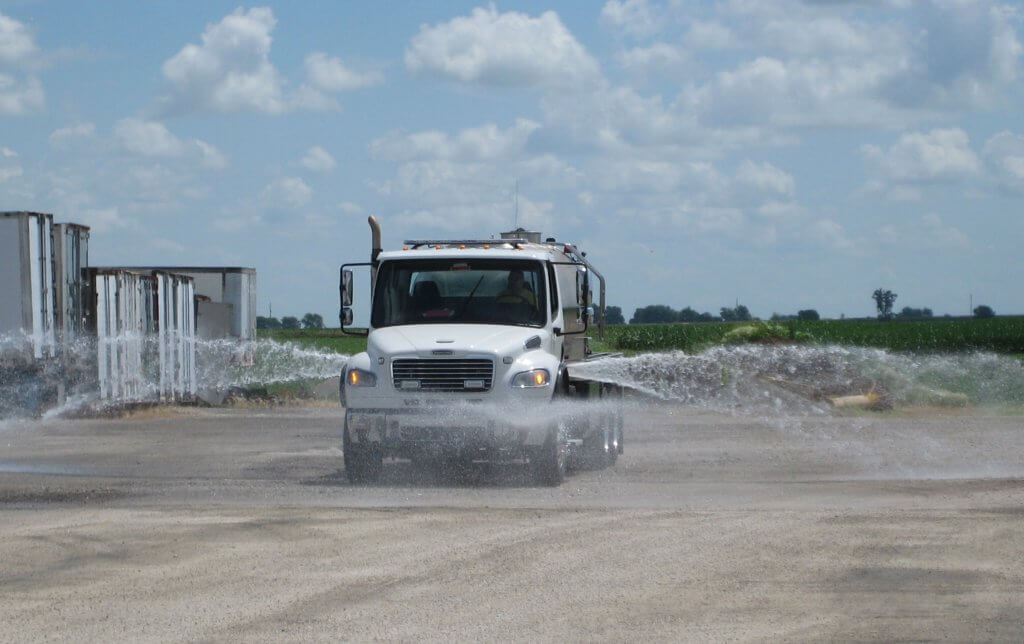
What Is a Fire Tanker?
A fire tanker generally refers to a truck that both carries water and actively supports firefighting operations. In many cases, a fire tanker includes a fire-rated pump, hose connections, and discharge capabilities that allow it to function as part of the suppression effort.
Fire tankers are built to:
- Transport water
- Supply water directly to engines or attack lines
- Operate pumps on scene
- Support sustained fire operations
Because of these added capabilities, fire tankers often have more complex systems and higher build costs than basic water tenders.
Fire tankers are commonly used by:
- Departments that respond directly to fires without hydrant access
- Rural districts that rely on shuttle operations
- Departments that need both transport and pumping in one unit
Why the Terminology Gets Confusing
The confusion comes from how different regions use the terms. In some areas, tanker is the traditional term for any truck that hauls water. In others, tender is preferred to avoid confusion with fuel tankers.
From a practical standpoint, what matters most is how the truck is built and how it will be used, not just what it’s called.
Key Differences Between a Water Tender and a Fire Tanker
Primary function
- Water tender: Water transport
- Fire tanker: Water transport plus firefighting support
Pump capability
- Water tender: None or limited
- Fire tanker: Fire-rated pump with discharge options
Complexity
- Water tender: Simpler systems, fewer components
- Fire tanker: More equipment, controls, and plumbing
Cost
- Water tender: Typically lower
- Fire tanker: Higher due to added features
Which One Do You Actually Need?
The right choice depends on how your department operates.
A water tender may be the better option if:
- You already have engines with pumps on scene
- Your main need is moving large volumes of water
- You want a simpler, more budget-friendly unit
A fire tanker may be the better choice if:
- You need pumping capability at the scene
- Your department relies on water shuttle operations
- You want one truck to handle multiple roles
Many departments choose a hybrid approach, building a truck that falls somewhere between a traditional water tender and a full fire tanker.
How Osco Helps You Get It Right
At Osco Tank & Truck Sales, we don’t push one label over another. We focus on how the truck will be used in real-world conditions. Whether you call it a water tender or a fire tanker, we work with you to design a unit that matches your response area, terrain, staffing, and budget.
From tank material and capacity to pump options and chassis selection, every build is tailored to your needs.
If you’re unsure which direction to go, Osco Tank & Truck is happy to talk through your operation and help you spec the right truck the first time. Contact us today!