When purchasing a new fire tanker truck or upgrading an existing apparatus, choosing the right water tank material is an important decision. The tank must support your department’s water supply needs, operating conditions, equipment requirements, and long-term budget.
Two common options are polypropylene (poly) fire tanks and stainless steel fire tanks. Both offer reliable water storage solutions when properly designed and installed, but their differences in weight, construction, corrosion resistance, maintenance, and cost can influence which is the better fit.
At Osco Tank & Truck Sales, we work with fire departments to evaluate their equipment needs and develop custom tanker solutions. Understanding the advantages and trade-offs of each material can help your department make a more confident purchasing decision.
Poly vs. Stainless Steel Fire Tanks: What’s the Difference?
The primary difference between poly and stainless steel fire truck tanks is the material used in their construction.
Poly tanks are manufactured from durable thermoplastic materials, such as high-impact-resistant copolymer polypropylene (CPP). These tanks are naturally resistant to rust, relatively lightweight, and adaptable to custom configurations.
Stainless steel tanks are fabricated from corrosion-resistant steel alloys. They offer structural strength, rigidity, and a traditional metal construction that can be customized for various apparatus applications.
Osco manufactures stainless steel tanks using T-304 stainless steel with a #4 polished finish and offers custom polypropylene tanks for fire apparatus.
Neither material is automatically the best choice for every department. The right selection depends on how the tanker will be built, operated, and maintained.
Poly vs. Stainless Steel Fire Truck Tanks: Side-by-Side Comparison
Before selecting a tank, it helps to compare the characteristics that can affect apparatus performance and long-term ownership.
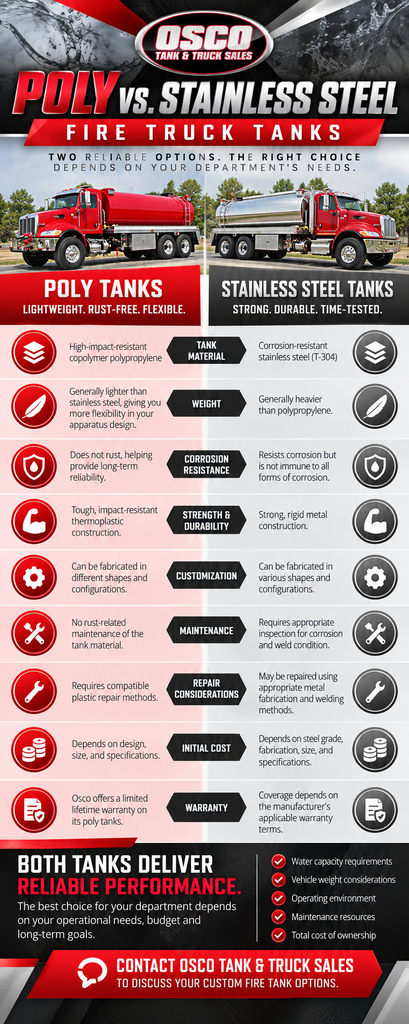
| Feature | Polypropylene Fire Tanks | Stainless Steel Fire Tanks |
|---|---|---|
| Tank material | High-impact-resistant copolymer polypropylene | Corrosion-resistant stainless steel, including T-304 |
| Weight | Generally lighter than comparable stainless steel construction | Generally heavier than polypropylene |
| Corrosion resistance | Does not rust | Resists corrosion but is not immune to all forms of corrosion |
| Structural characteristics | Tough, impact-resistant thermoplastic construction | Strong, rigid metal construction |
| Customization | Can be fabricated in different shapes and configurations | Can be fabricated in various shapes and configurations |
| Maintenance | No rust-related maintenance of the polypropylene material | Requires appropriate inspection for corrosion and weld condition |
| Repair considerations | Requires compatible plastic repair methods | May be repaired using appropriate metal fabrication and welding methods |
| Initial cost | Depends on design, size, and specifications | Depends on steel grade, fabrication, size, and specifications |
| Warranty | Osco offers a limited lifetime warranty on its poly tanks | Coverage depends on the manufacturer’s applicable warranty terms |
Both materials can perform well in demanding firefighting applications. However, their differences become more important when considering specific departmental requirements.
When Is a Poly Fire Tank the Better Choice?
Polypropylene tanks are worth considering when a department prioritizes tank weight, corrosion resistance, and flexibility in apparatus design.
Departments Managing Vehicle Weight
A fire tanker’s total weight includes much more than the empty tank.
Water weighs approximately 8.34 pounds per gallon. A 3,000-gallon tank filled with water carries approximately 25,020 pounds of water before accounting for the tank structure, chassis, pump, equipment, and personnel.
Because polypropylene is generally lighter than stainless steel, a poly tank may provide additional flexibility when configuring the completed vehicle.
This can be especially important when balancing water capacity with chassis and axle weight ratings.
However, a lighter tank does not automatically mean a department can carry more water. The completed apparatus must still meet applicable vehicle weight and safety requirements.
Departments Seeking Rust-Free Tank Construction
Polypropylene does not rust, making it attractive for equipment regularly exposed to water and moisture.
Unlike conventional carbon steel, polypropylene does not require protective coatings to prevent the tank material itself from rusting.
Stainless steel also offers substantial corrosion resistance, although certain environmental conditions, chemicals, or improper maintenance practices can still contribute to corrosion.
Departments should consider the type of water and any additives the tank may carry when evaluating material compatibility.
Departments Requiring Custom Configurations
Poly tanks can be manufactured in different sizes and shapes to accommodate specific apparatus designs.
For example, Osco’s Dominator Series offers custom poly tank and body configurations, including elliptical and rectangular wetside designs.
These options allow departments to evaluate how tank shape, capacity, and equipment placement fit their operating needs.
For a closer look at polypropylene construction and performance, explore our guide to the Advantages of Poly Tanks for Fire Trucks. (Replace this homepage link with the restored Poly Tank Advantages article URL.)
When Is a Stainless Steel Fire Tank the Better Choice?
Stainless steel tanks remain a strong option for departments that prefer rigid metal construction, established fabrication methods, and corrosion-resistant steel.
Departments Prioritizing Structural Rigidity
Stainless steel provides a rigid tank structure that can be engineered for demanding vehicle applications.
Osco’s T-304 stainless steel tanks are designed for use on custom tank trucks and can be mounted using appropriate skid configurations.
Structural rigidity can be an important consideration, but tank performance also depends on the complete design, including mounting, internal reinforcement, baffling, and the stresses encountered during operation.
A properly engineered polypropylene tank can also perform effectively in demanding service.
Departments That Prefer Metal Fabrication and Repair Methods
Some departments may prefer stainless steel because they are familiar with metal tank construction and repair procedures.
When appropriate, stainless steel tanks can be evaluated and repaired using qualified welding and fabrication methods.
Repair feasibility depends on the nature and location of the damage, the tank’s design, and the manufacturer’s recommendations.
Polypropylene tanks may also be repairable, but they require compatible materials and specialized plastic repair procedures.
Departments Considering Long-Term Service Life
Stainless steel is widely used in applications requiring durable, corrosion-resistant construction.
Osco offers T-304 stainless steel tanks and identifies a service life of 20 years or more for its stainless tank products under appropriate conditions.
Actual service life depends on the tank’s design, use, maintenance, and operating environment.
Rather than relying on a specific lifespan alone, departments should evaluate construction quality, inspection requirements, repair options, and manufacturer support.
Learn more about Osco’s custom stainless steel tank options.
How Does Tank Material Affect Fire Truck Performance?
Tank material is important, but it is only one factor in the performance of a fire tanker.
A well-designed apparatus must account for water capacity, vehicle weight, water movement, operating conditions, and equipment requirements.
Tank Weight and Water Capacity
A lighter tank structure may help reduce the empty weight of an apparatus.
However, water is typically one of the largest contributors to a tanker’s loaded weight.
Departments must evaluate gross vehicle weight rating (GVWR), axle ratings, weight distribution, and the complete vehicle configuration before determining an appropriate water capacity.
Water Movement and Vehicle Handling
Water moves inside a tank as a vehicle accelerates, brakes, and turns.
This movement, commonly called water surge, can affect vehicle handling.
Proper internal baffling and tank design help manage water movement. These considerations apply to both polypropylene and stainless steel tanks.
Terrain and Operating Conditions
Fire tankers may operate on paved roads, rural routes, gravel surfaces, or uneven terrain.
Regardless of tank material, the apparatus must be designed for its expected operating conditions.
Tank mounting, chassis selection, suspension, load distribution, and overall construction are all important considerations.
The best-performing fire tanker is not simply the one with the strongest or lightest tank material. It is the one whose complete design matches the department’s operational needs.
What About the Total Cost of Ownership?
Fire departments often operate within limited equipment budgets, making purchase price an important consideration.
However, the initial cost of a water tank does not tell the entire story.
When comparing poly and stainless steel tanks, departments should consider the total cost of ownership.
Important factors include:
- Initial purchase price: Tank material, capacity, fabrication, and custom features affect the final cost.
- Maintenance requirements: Both materials require inspections, although the types of maintenance may differ.
- Repair considerations: Availability of qualified repair services and compatible materials can influence future expenses.
- Operating conditions: Water quality, environmental exposure, and frequency of use can affect long-term performance.
- Warranty coverage: Manufacturer warranties may differ in duration, coverage, and exclusions.
- Expected service life: A tank’s value depends on how well it performs throughout its useful operating life.
Polypropylene may offer savings through reduced rust-related maintenance, while stainless steel may appeal to departments seeking metal construction and established repair methods.
Neither material should automatically be considered the least expensive option without evaluating the actual specifications and ownership requirements.
Five Questions to Ask Before Choosing a Fire Truck Tank
Before making a purchasing decision, your department should consider the following questions.
1. How Much Water Does Our Department Need to Carry?
Evaluate your response area, available water sources, mutual aid arrangements, and typical firefighting operations.
Departments relying on rural water shuttle operations may have different capacity requirements than those serving areas with dependable hydrant access.
2. What Are Our Vehicle’s Weight Limitations?
Determine how the proposed tank will affect the completed apparatus.
Consider water weight, chassis capabilities, axle ratings, pumps, equipment, and personnel.
Tank material should be evaluated as part of the overall weight management strategy.
3. What Operating Conditions Will the Tank Encounter?
Consider road conditions, temperature changes, water quality, and any approved additives or other substances the tank may carry.
Material compatibility and the complete tank design should reflect these conditions.
4. What Maintenance and Repair Resources Are Available?
Evaluate your department’s ability to inspect, maintain, and arrange repairs for the selected tank material.
Ask about recommended maintenance procedures, repair options, and manufacturer support.
5. What Does the Manufacturer’s Warranty Cover?
Warranty terms can influence long-term purchasing decisions.
Osco offers a limited lifetime warranty on its polypropylene tanks, providing an important consideration when comparing available options.
Departments should review current warranty documentation to understand coverage, exclusions, and applicable conditions.
Custom Poly and Stainless Steel Fire Tanks From Osco
At Osco Tank & Truck Sales, we understand that fire departments have different water supply requirements, equipment preferences, and budgets.
That’s why we offer custom fire tanker solutions rather than relying on a single tank material or configuration.
Our Commander Series fire apparatus offers both T-304 stainless steel and high-impact-resistant polypropylene tank options.
For departments interested in an all-poly tank and body configuration, our Dominator Series provides additional custom design possibilities.
Depending on the apparatus, available options may include different tank capacities, configurations, pump systems, baffling, fittings, and equipment storage solutions.
Whether you’re evaluating a new tanker or considering an upgrade to your existing fleet, our team can help you compare the available materials and configurations.
Explore our custom fire truck and tanker options to learn more.
Frequently Asked Questions About Poly vs. Stainless Steel Fire Tanks
Is a poly fire tank lighter than a stainless steel tank?
Polypropylene is generally lighter than stainless steel, so a comparable poly tank may weigh less. Actual tank weight depends on capacity, wall thickness, reinforcement, fittings, and overall construction. Departments should compare specifications for the complete tank and apparatus rather than material weight alone.
Which fire truck tank material is more corrosion-resistant?
Polypropylene does not rust and offers resistance to many substances. T-304 stainless steel also provides substantial corrosion resistance, but it can experience corrosion under certain conditions. The best choice depends on the intended contents, operating environment, and maintenance practices.
Are stainless steel fire tanks stronger than poly tanks?
Stainless steel is a strong, rigid metal, while polypropylene is a tough thermoplastic with different mechanical properties. However, material strength alone does not determine tank performance. Proper engineering, reinforcement, baffling, and mounting are essential for both types of tanks.
Which type of fire tank requires less maintenance?
Both polypropylene and stainless steel tanks require routine inspections and maintenance. Poly tanks eliminate rust-related maintenance of the tank material, while stainless steel offers corrosion resistance but may require inspection for localized corrosion or weld-related issues. Maintenance requirements depend on the complete tank design and operating conditions.
Are poly tanks less expensive than stainless steel fire tanks?
Not necessarily. Tank pricing depends on capacity, material, fabrication, customization, and installation. Poly tanks may offer advantages in certain applications, but departments should compare actual quotes and consider long-term maintenance and repair costs before making a decision.
Does Osco offer both poly and stainless steel fire truck tanks?
Yes. Osco Tank & Truck Sales offers custom polypropylene and T-304 stainless steel tank options. Our Commander Series can be configured with either material, allowing departments to select a solution suited to their operating needs and budget.
Find the Right Fire Tank for Your Department
Choosing between a polypropylene and stainless steel fire truck tank isn’t about finding one material that’s best for everyone.
It’s about understanding how each option fits your department’s water capacity requirements, vehicle configuration, operating environment, maintenance priorities, and budget.
Poly tanks offer advantages in weight management, rust resistance, and design flexibility. Stainless steel tanks provide rigid metal construction, corrosion resistance, and established fabrication and repair options.
Both can deliver dependable service when properly designed and maintained.
At Osco Tank & Truck Sales, we’re here to help you evaluate the differences and build a tanker that meets your department’s needs.
Contact Osco Tank & Truck Sales today to discuss your fire tank options and start planning your custom apparatus.