At Osco Tank & Truck Sales, we take pride in the Fusion Vacuum Tanker Trucks we build. But have you ever wondered how vacuum tankers work?
These trucks can be highly beneficial for operations that move large amounts of liquid or waste. Understanding how vacuum tanker trucks work, their primary parts, and their common uses can help you choose the right configuration for your operation.
Parts of a Vacuum Tanker Truck
Although vacuum tanker trucks can be customized for different applications, their primary components generally include:
- Cab: This is where the driver sits and controls the truck.
- Tank: Either made from steel or aluminum. It holds the liquid or waste inside.
- Pump: The pump is used to create negative air pressure. It takes power from the engine and creates a suction for the vacuum.
- Primary: The primary chamber collects all the liquid or waste vacuumed. It protects the pump in case it gets too full.
- Secondary: The secondary chamber is smaller and protects the pump if the primary chamber stops working.
- Discharge Valve: Empties the liquid or waste.
- Intake Valve: The hose is attached to the intake valve to extract the liquid or waste.
Suction and Force Key for Vacuum Trucks

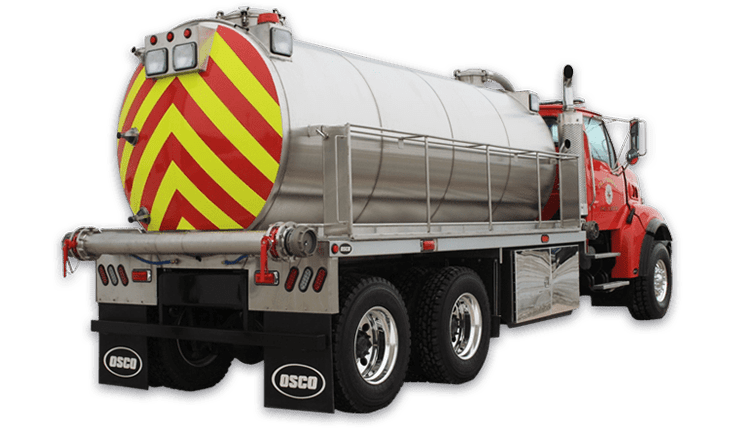
A vacuum truck includes a strong pump that gives suction power to the vacuum. A vacuum force is formed after the air is removed.
Once the primary and secondary shutoff valves are opened, the vacuum force will equal itself with the outside and can then take up any liquids or fluids. The discharge valve is then used to dispose of anything extracted.
Air is the only thing that should flow through a vacuum pump. The pump creates a vacuum in the tank, allowing the vacuum to do all the work.
Common Uses for Vacuum Tanker Trucks
Vacuum tankers are not just for suction and water draw – they serve multiple purposes across various industries. Some of their primary uses include:
- Waste Removal: Vacuum tankers are commonly used to clean up waste spills or remove liquid waste from locations like septic tanks. They can also help with oil spill cleanups and other hazardous materials.
- Water Transport: In rural areas, vacuum tankers can draw water from lakes, streams, or other natural sources to use in different locations, saving costs on water delivery and avoiding the use of chemicals found in purified water, which can affect crop yields.
- Material Transportation: Vacuum tankers can safely transport difficult-to-move materials, especially in hard-to-reach or remote locations. They ensure these materials are safely contained, reducing environmental impact.
- Safety and Environmental Protection: Vacuum tankers provide a safe way to remove hazardous materials, keep dangerous substances from spreading, and help maintain air and environmental quality.
- Double-Duty Applications: Many operations use vacuum tankers for multiple tasks, such as both water transport and waste cleanup. However, it’s essential not to mix fresh water and dangerous waste, even after cleaning. Switching between uses is possible but should be done carefully to avoid contamination.
Custom Fusion Vacuum Tanker Trucks from Osco
Different jobs require different vacuum tanker configurations. At Osco Tank & Truck Sales, we work with our customers throughout the design and build process to create a Fusion Vacuum Tanker Truck for their specific needs.
We work with our customers throughout the entire process so they can get the perfect vacuum truck for their needs.
Contact Osco Tank & Truck Sales to discuss your custom Fusion Vacuum Tanker Truck.